



Exchange PowerShell Quickstart - Part 4
-
Twan van Beers
-
21 November, 2014
Over the past three parts we have covered connecting to Exchange and discovering cmdlets in part 1. We explored the pipeline in part 2 followed by hash tables, arrays and variables in part 3. This week we’re covering flow control in terms of conditional and iterative processing.
We covered where (?) and foreach (%) as part of the pipeline discussion part 2, but we can write small scripts that can be a bit easier to follow than a single long pipeline command. Personally I love the pipeline for working directly within PowerShell, but for anything that needs to be run many times over, or handed over for others to use or support, then I write small scripts instead. I still use the pipeline (|) a little bit in scripts but only to optimize things like mermory usage, which is a more advanced area of discussion.
Conditional Processing
There are two constructs for conditional processing. if/else and switch, both perform similar tasks of only executing a piece of script if some set of conditions is met
if/else
$aVariable = 'droid' if( $aVariable -eq 'droid' ) { write-host 'We have a droid' } else { write-host 'there are no droids here' }You can get more complicated with adding multiple logical expressions, such as -or, -and, -not, -lt, etc, as we looked at in part 2. You can also have more than just if and else
$aVariable = 'droid' if( $aVariable -eq 'droid' ) { write-host 'We have a droid' } elseif( $aVariable -eq 'humanoid' ) { write-host 'We have a humanoid' } else { write-host 'there are no droids here' }Switch
Of course as we want to add more and more cases then that starts to look a bit more cumbersome, so then we have the swtich statement. If we take the above example and write it as a switch we get
$aVariable = 'droid' switch( $aVariable ) { 'droid' { write-host 'We have a droid' break } 'humanoid' { write-host 'We have a humanoid' break } default { write-host 'there are no droids here' } }The observant amongst you will have noticed a special keyword ‘break’ This ensures that Powershell doesn’t just fall down into the next switch condition and breaks out of the switch. For direct equality conditions that won’t be an issue but as you start to write switch statements that use wildcards or regular expressions it is safest to always put in an explicit break statement
Iterative Processing
There are four iterative processing constructs in PowerShell. These are foreach, for, while and do. They all iterate through a set of data and process each one, but they do slightly differ.
Foreach
Foreach is similar to the ForEach-Object (or %) used on the command line, but it allows us to more narratively access each occurrence.
$Mailboxes = Get-Mailbox Foreach( $Mailbox in $Mailboxes ) { Write-Host $Mailbox.DistinguishedName }In the above trivial example we just iterate through the mailboxes and print out the distinguished name, and it is a very readable format. Even if you didn’t know PowerShell you could guess what it would do
For
The For statement is generally more dedicated to counter loops, where you want something to happen say 10 times
for( $i=0; $i -lt 10; $i++ ) { Write-Host $i }While
The while statement runs the commands within the while statement as long as the condition is met
$i = 0 while( $i -lt 10 ) { Write-Host $i $i++ }Do
The Do statement is similar to the while excpet it always runs at least one time, irrespective of whether the condition is met or not. So in the example below we’d still write out the value 11
$i = 11 Do{ Write-Host $i $i++ } while ( $i -lt 10 )In Summary
Once you start writing scripts for others to use then you will want to become familiar with conditional and iterative processing, and continue to use narative names for your variables so that the resulting script is largely self documenting. Next time we will dive into Error Handling with PowerShell
See you all next time!
Twan van Beers
Twan is a senior consultant with over 30 years of experience. He has a wide range of skills including Messaging, Active Directory, SQL, Networking and Firewalls. Twan loves to write scripts and get deep and dirty into debugging code, in order to understand and resolve the most complex of problems.
News & Insights
Trusted insights on technology and innovation to power your business growth.

-
03/06/2026
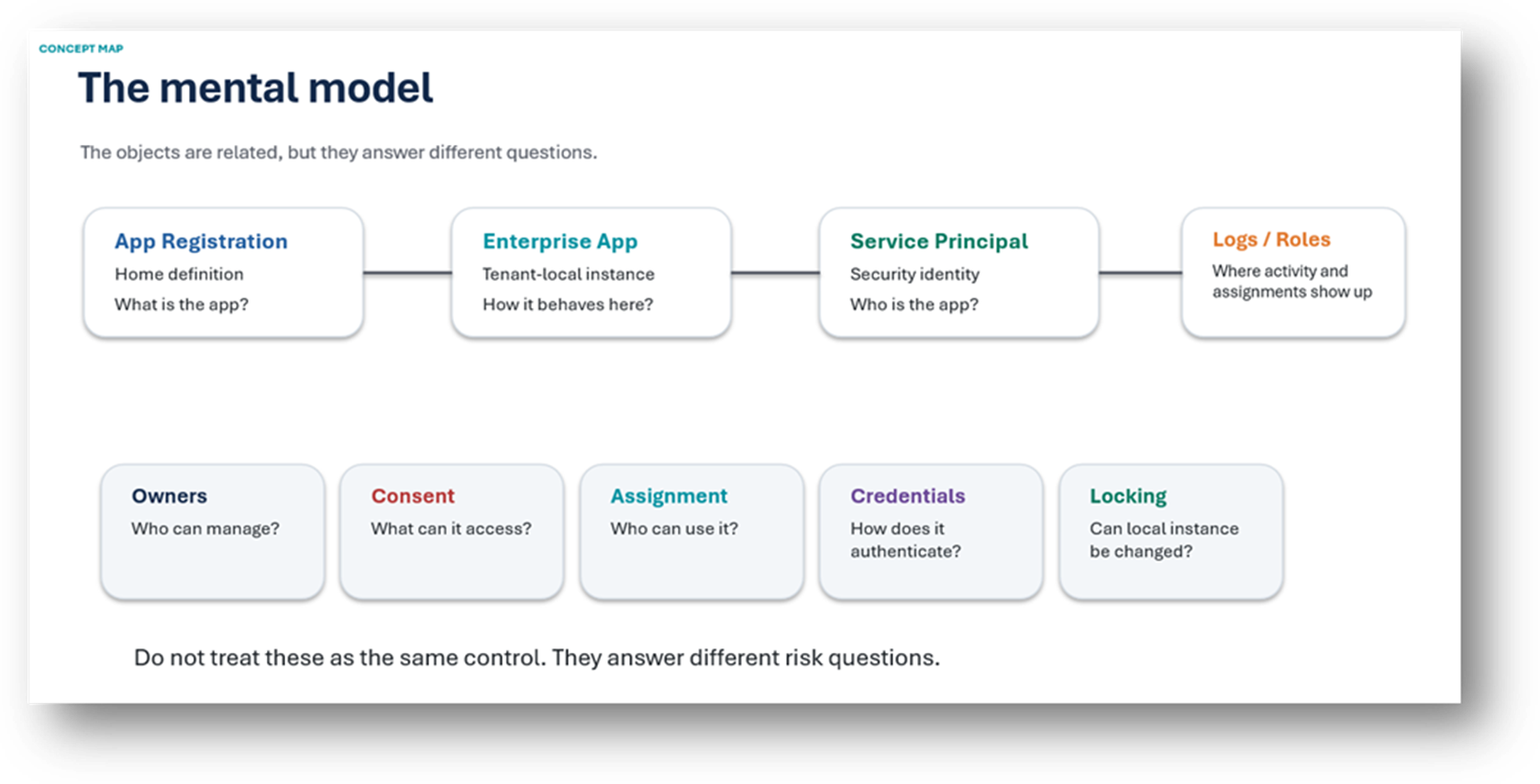
A practical engineering guide to owners, assignment, consent, credentials and ...
Read More
-
19/05/2026
Domain migrations in Microsoft 365 are rarely as simple as shifting email ...
Read More
-
12/05/2026
Over the past 10 to 15 years, Microsoft 365 has fundamentally reshaped how ...
Read More

-
07/05/2026
Yesterday we had an all company meeting and I thought it would be cool to kick ...
Read More

-
07/05/2026
Planning a tenant-to-tenant migration? Talk to us
Read More
-
31/03/2026
In tenant-to-tenant (T2T) and Google-to-Microsoft 365 migration projects, ...
Read More

-
27/03/2026
You’d think this would be easy and not an uncommon request. There are genuine ...
Read More

-
23/03/2026
Managing Google to Microsoft Migration with GAM7 and PowerShell
Read More
-
16/03/2026
When a user leaves an organisation in Microsoft 365, administrators have ...
Read MoreSubscribe to our newsletter for the latest updates and insights.
Like what you see? Stay in touch! Subscribers to our email list are among the first to receive the latest news, views and updates from Nero Blanco
Exchange PowerShell Quickstart - Part 4">